01 / LearnInteractive
Interactive
course
Teaching, media, decisions and practice organized into one learner path.
Open opioid course ↗ Ashley Miller, PMHNP-BCInstructional designer · system builder
Built fast. Reviewed like it matters.
I’m a psychiatric nurse practitioner and instructional designer. I research deeply, design whole learning journeys, build in Articulate, and use AI to speed production without letting it make the final call.
AI can move the work faster.
It does not get to lower the standard.
An interactive course, original video, participant practice and a facilitator route, all carrying the same learning purpose.
Teaching, media, decisions and practice organized into one learner path.
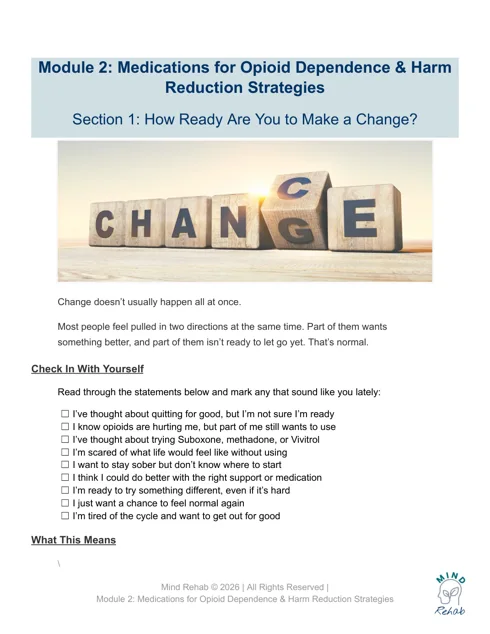
Open opioid course ↗Private reflection and usable prompts, with room to write rather than just read.
View 4-page excerpt ↗The same learner pages translated into session flow, prompts and facilitation boundaries.
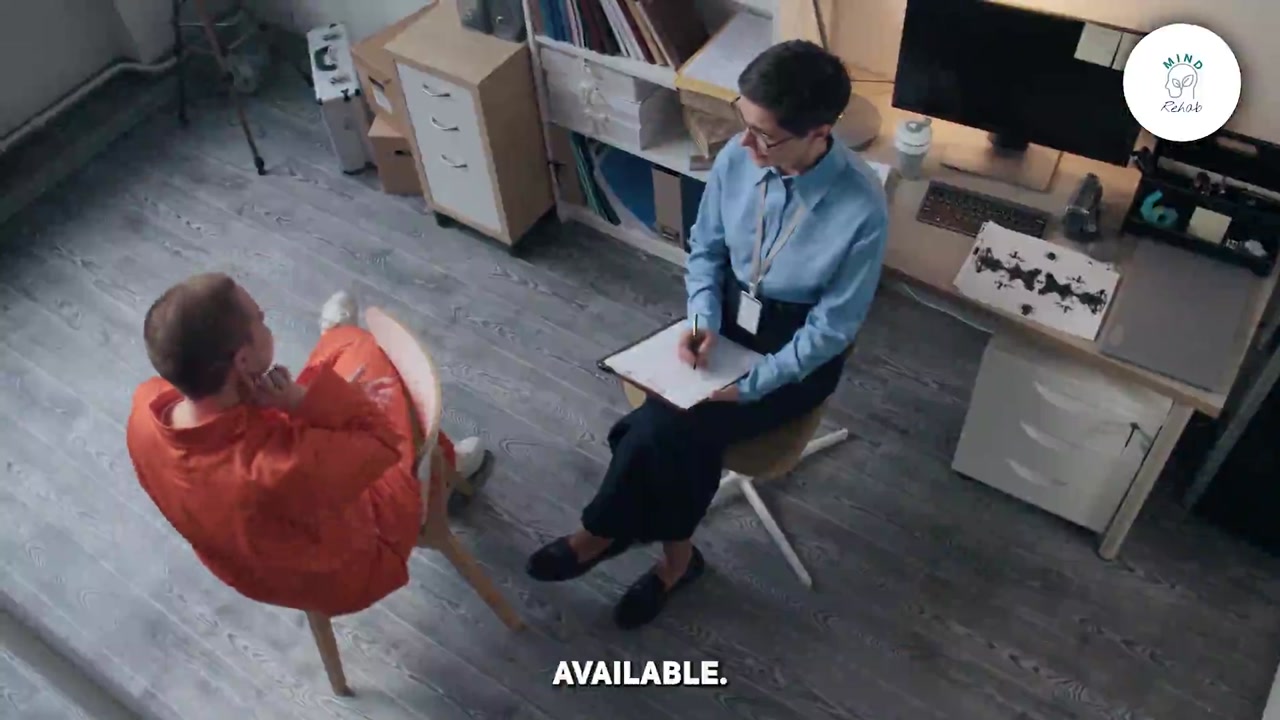
View 2-page excerpt ↗Original Opioids & Your Brain workbook and guide excerpts. Film stills come from the related MOUD & Harm Reduction lesson. The Articulate course opens separately.
Move beyond terminology into noticing a trigger, choosing a response and planning a next step.
Use an adult voice and private reflection without demanding personal disclosure.
Carry the same idea through independent learning, participant practice and a guided group.
Program-level engagement evidence is reported below with its denominator and limits. I do not attach a broad metric to a single course unless the data supports that connection.
Illustrated learning, visual cues and reflective prompts. The teaching has a clinical foundation; the experience does not have to read like a clinical manual.
Selected original program pages. Excerpts demonstrate instructional design and are not standalone treatment guidance.
Every project starts with the performance problem and ends with a delivery route people can actually use.
Designed correctional and reentry education in Canva and Articulate across GED preparation, workforce integration, personal finance, parenting, recovery and practical life skills.
Lead program design for a confidential, peer-driven wellness network serving corrections, law enforcement, military and other public-safety professionals.
Built a repeatable sanitation-training framework that adapts shared standards to the decisions people make in different facilities.
High-level inventory only. Proprietary course content and editable sources are not exposed here.
This small scenario demonstrates how I design feedback around a performance decision. It is built in HTML for this portfolio; production Storyline builds use variables, triggers, feedback states and completion gates.
She completed the product course, but still needs help to finish the most common workflow. What should the learning team change first?
I do not hand an empty prompt to a model and hope it makes a course. I build the source environment, the design logic and the review system first.
I load the approved source pack, guardrails, voice rules and build schema into a Claude Project. I prompt Claude to shape the production package and the prompts used by supporting tools. ChatGPT specialists and Articulate AI help with bounded tasks. I accept, reject and revise the work before it moves forward.
What I reject: unsupported claims, polished-but-empty explanations, childish language, generic interactions, invented citations and anything that breaks the approved scope.
When specialist judgment is needed, a qualified clinician or subject expert reviews the content. I call that peer review in the practical team sense, not academic journal peer review.
My language guides use an adult, dignity-preserving baseline that can reach roughly a fifth-grade reading level when the audience needs it. The rules change with the learner, setting and emotional load.
“Utilize adaptive coping mechanisms to regulate distress.”
Use“Notice what is happening in your body. Choose one thing that helps you get steady enough for the next step.”
The first benchmark: a 30-minute course rebuilt in one week while the reusable process itself was being created. Future-cycle savings are being measured rather than assumed.
I developed a proprietary Storyline build workflow for situations where direct plugin access was not available. It converts an approved source package into a build-ready specification covering branches, variables, feedback states, trigger logic, accessibility, completion behavior and LMS acceptance tests.
The public version stays intentionally high level. It shows the architecture without exposing client material, source files or private prompts.
Content architecture, delivery choices, access, learning paths and the information staff need to support the learner.
I think about the person using the material and the team responsible for delivering it.
My work extends into LMS planning and configuration: how content is organized, how learners reach it, how staff assign it, and how completion and updates are handled. Each delivery route has different requirements.
Define scope, learner, owner and content boundaries.
Organize decisions and practice into a coherent sequence.
Adapt media, interactions and checks to the platform.
Support the platform’s approved access route.
Use behavior, feedback and QA findings to guide updates.
Native-platform courses are designed for that environment rather than treated as generic files dropped into a catalog.
Keep approved sources and learning assets aligned.
Define launch, resume, completion and assessment rules.
Plan enrollment, permissions and partner access.
Connect assignments, resources and certificates.
Separate learner progress from content maintenance.
Moodle/Open LMS and SCORM are my current production systems. The governance, QA and reporting principles transfer across enterprise LMS environments.
Keep teaching consistent with the digital pathway.
Make each section clear enough to use on its own.
Provide useful prompts and room for reflection.
Map the same pages to group goals and prompts.
Listen to staff and learners, then refine the materials.
Print is a deliberate learning route, not a fallback document dump. Matching facilitator resources make the same content usable in guided groups or independent practice.
Conceptual delivery models for this portfolio. Not a production infrastructure diagram, security certification or claim that every integration is live. Private architecture, credentials and learner records are not included.
I separate production evidence, engagement signals and actual outcomes. A large number without a denominator or a clear source is not a result.
364 completions from 449 course starts across 18 Mind Rehab titles in an Edovo sample.
Course-level ratio, not unique learners, not a clinical outcome and not evidence of causation. The widely distributed free Sleep course is excluded. The reporting date range and underlying export were not supplied with this portfolio build.
Reentry to Recovery work across reentry, GED, workforce and life-skills education using Canva, Articulate and correctional delivery workflows.
User-supplied professional history; presented as experience, not a claim that Ashley created the entire catalog.A 30-minute course was rebuilt in one week while the reusable production and review workflow was being developed.
Self-reported internal build benchmark. Future-cycle time reduction is not claimed until it is measured.Five published Sanitorial courses verified in the source library, with one additional AI outline in development.
Inventory evidence only. Completion, transferability and learner outcomes are separate questions.
Psychiatric nurse practitioner
Instructional designer · program builder
I want the learning to feel like someone understands the person on the other side of the screen.
My correctional psychiatric practice gives me a close view of the distance between knowing a concept and being able to use it in a difficult moment.
I bring that perspective to instructional design: deep research, adult language, useful decisions, a clear production system and delivery that survives contact with the real world.
My work includes Mind Rehab, Off the Record, three years of instructional design with Reentry to Recovery, and the Sanitorial learning product line.